Shelf-Stable Breakfast Hash
Canned potatoes browned in a pan with corned beef and corn. A hot, filling breakfast cooked outdoors in one pan.
- Serves 4 servings
- Time 20 min
- Heat Outdoor stove
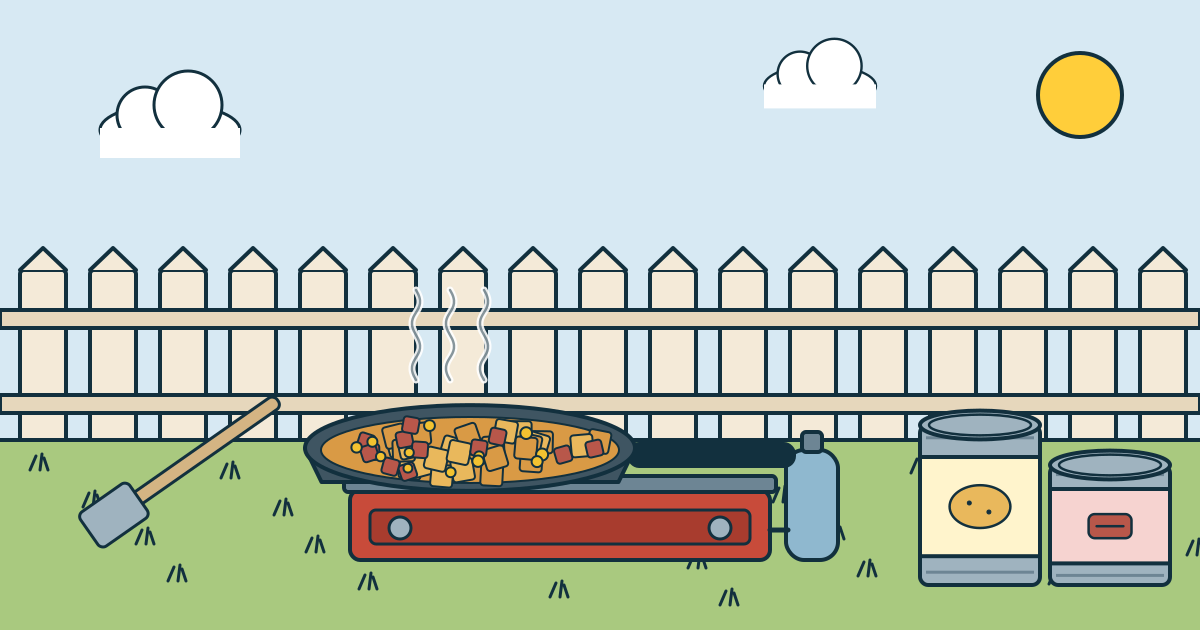
Most no-power breakfasts are cold cereal. When you have fuel and a safe place outdoors to cook, this is a hot alternative that uses only cans.
Ingredients
Scaled from 4. Round cans to the nearest whole one, and add spices to taste.
- 2 cans (15 oz / 425 g each) diced or sliced potatoes, drained
- 1 can (12 oz / 340 g) corned beef, or canned ham or chicken
- 1 can (15 oz / 425 g) whole kernel corn, drained
- 2 tbsp (30 mL) vegetable oil
- 1 tsp (5 mL) onion powder
- ½ tsp (2 mL) paprika
- pepper, ketchup or hot sauce, to serve
Equipment
- Camp stove or barbecue burner, outdoors only
- Large frying pan
- Spatula
- Manual can opener
- Paper towel
Fuel used
About 15 minutes on one burner at medium heat. Potatoes from a can are already cooked, so you are browning and heating them, not cooking them through.
Steps
- Set the stove up outdoors on a flat, stable surface, at least 20 feet (6 m) from doors, windows and vents.
- Check the cans, wipe the lids and open them. Drain the potatoes and pat them dry with paper towel. Drain the corn.
- Heat the oil in the pan over medium. Add the potatoes, press them flat and leave them for about 5 minutes to brown.
- Turn them over, then add the corn, onion powder and paprika.
- Break the meat into small pieces over the pan and stir it in. Cook, turning now and then, until everything is hot and crisp in places.
- Turn the stove off and serve with pepper, ketchup or hot sauce. Eat it within 2 hours unless your fridge is working.
Swaps from the pantry
- Canned sweet potatoes, drained, instead of white potatoes.
- A can of black beans instead of the meat.
- Canned luncheon meat, cut into cubes.
- Dried thyme or chili powder instead of paprika.
Allergens
None of the main allergens in the base recipe. Some canned meats contain soy, wheat or milk ingredients, so check the label.
Ingredients vary by brand, so read every label for your household's allergies.
Food safety
- Check every can before you open it. Do not use food from cans that are leaking, bulging or badly dented, or that have a deep dent on a seam.
- Once opened, eat it within 2 hours, or 1 hour when it is above 90°F (32°C). If your fridge is working and at or below 40°F (4°C), put leftovers in a covered container and refrigerate them. If not, throw leftovers out. See food safety when the fridge fails.
- Use safe drinking water for everything here, and especially for water that is not cooked: bottled, or boiled or treated as in treating water.
- When in doubt, throw it out. Do not taste food to test it.
Where to buy
Some links earn me a commission at no cost to you. How this works
Canned beans, tuna, chicken or stew
Canned chunk chicken breast, multi-pack
Fully cooked and ready to eat from the can; USDA FSIS lists canned meat and poultry at 2 to 5 years.
Check prices and optionsat Amazon.comCheck prices and optionsat Amazon.caCamp stove, outdoor use only
Coleman: Coleman Classic 2-Burner Propane Camp Stove
A two-burner propane stove for cooking through an outage; use it outdoors only, never indoors or in a garage, because it produces carbon monoxide.
Check prices and optionsat Amazon.comCheck prices and optionsat Amazon.caBattery-operated carbon monoxide alarm
Kidde: Kidde KN-COB-B-LP Nighthawk Carbon Monoxide Alarm, Battery Operated
Kidde lists it as UL Listed with an electrochemical sensor, and it runs on 3 AA batteries so it keeps working in a power outage.
Check prices and optionsat Amazon.comCanadian link coming soonBattery-operated carbon monoxide alarm
Kidde: Kidde C3010 Worry-Free Carbon Monoxide Alarm, 10-Year Sealed Battery
Kidde lists its Canadian C3010-CA as CSA Listed with an electrochemical sensor and a sealed lithium battery, so it keeps working in an outage; check the listing shows the CSA mark before buying.
US link coming soonCheck prices and optionsat Amazon.ca
Sources
- USDA FSIS: Shelf-Stable Food Safety https://www.fsis.usda.gov/food-safety/safe-food-handling-and-preparation/food-safety-basics/shelf-stable-food
- Ready.gov: Food https://www.ready.gov/food
- FoodSafety.gov: Food Safety During a Power Outage (chart) https://www.foodsafety.gov/food-safety-charts/food-safety-during-power-outage
- CDC: How to Make Water Safe in an Emergency https://www.cdc.gov/water-emergency/about/index.html
Updated