Ramen Upgrade
Instant noodles made into a fuller meal with canned chicken and vegetables. About 10 minutes on an outdoor stove.
- Serves 2 servings
- Time 10 min
- Heat Outdoor stove
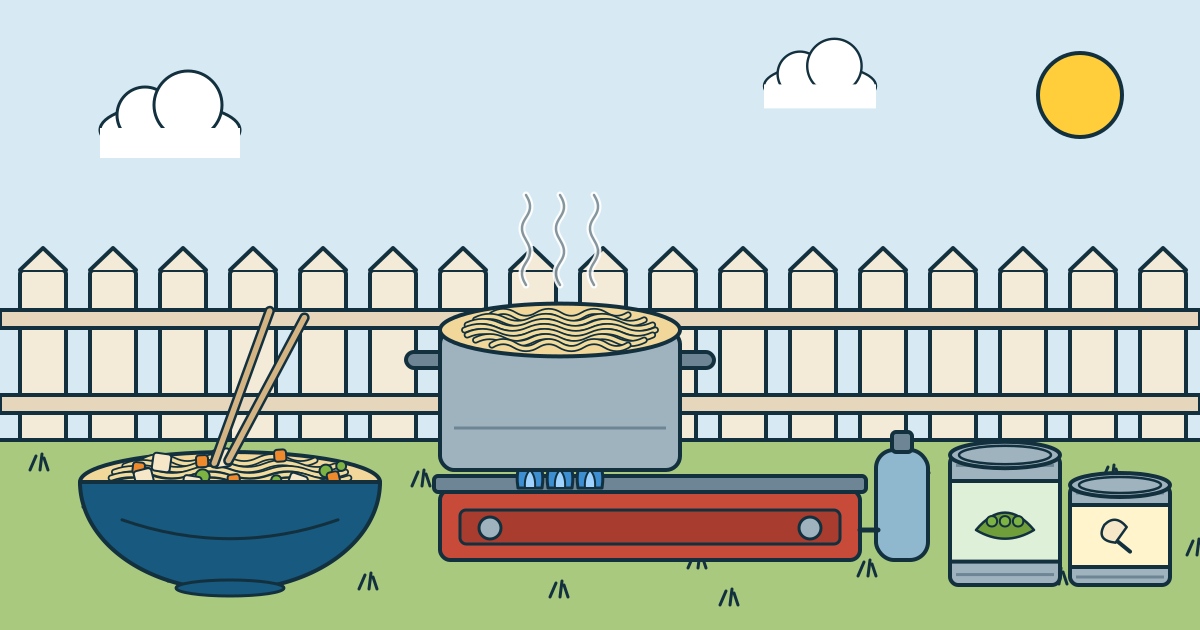
Instant noodles cook faster than almost anything else in the pantry. On their own they are mostly carbohydrate, so this adds a can of protein and a can of vegetables.
Ingredients
Scaled from 2. Round cans to the nearest whole one, and add spices to taste.
- 3 cups (750 mL) safe drinking water, or as the package says
- 2 packages (3 oz / 85 g each) instant ramen noodles
- 1 can (15 oz / 425 g) peas and carrots or mixed vegetables, drained
- 1 can (5 oz / 142 g) chunk chicken, drained
- 1 tbsp (15 mL) peanut butter, optional
- soy sauce or hot sauce, to taste, optional
Equipment
- Camp stove or barbecue side burner, outdoors only
- Medium pot with a lid
- Manual can opener
- Fork or tongs
Fuel used
About 5 to 8 minutes on one burner. Less water boils faster and gives a thicker broth.
Steps
- Set the stove up outdoors on a flat, stable surface, at least 20 feet (6 m) from doors, windows and vents.
- Check the cans, wipe the lids and open them. Drain the vegetables and chicken.
- Bring the water to a boil with the lid on.
- Add the noodles and cook as the package says, usually about 3 minutes, stirring to separate them.
- Stir in the vegetables, chicken and as much of the seasoning packet as you like. Heat until steaming.
- Turn the stove off. Stir in the peanut butter if using. Let bowls cool a little before handing them to children.
Swaps from the pantry
- Canned tuna or salmon instead of chicken.
- Canned corn, spinach or bean sprouts instead of peas and carrots.
- Rice noodles for a wheat-free version.
- Using half the seasoning packet keeps the salt down.
Allergens
- Wheat
- Soy
- Peanuts
Wheat in the noodles. Seasoning packets often contain soy and sometimes milk or fish; check the packet. Peanuts only if you add peanut butter.
Ingredients vary by brand, so read every label for your household's allergies.
Food safety
- Check every can before you open it. Do not use food from cans that are leaking, bulging or badly dented, or that have a deep dent on a seam.
- Once opened, eat it within 2 hours, or 1 hour when it is above 90°F (32°C). If your fridge is working and at or below 40°F (4°C), put leftovers in a covered container and refrigerate them. If not, throw leftovers out. See food safety when the fridge fails.
- Use safe drinking water for everything here, and especially for water that is not cooked: bottled, or boiled or treated as in treating water.
- When in doubt, throw it out. Do not taste food to test it.
Where to buy
Some links earn me a commission at no cost to you. How this works
Canned beans, tuna, chicken or stew
Canned chunk chicken breast, multi-pack
Fully cooked and ready to eat from the can; USDA FSIS lists canned meat and poultry at 2 to 5 years.
Check prices and optionsat Amazon.comCheck prices and optionsat Amazon.caCamp stove, outdoor use only
Coleman: Coleman Classic 2-Burner Propane Camp Stove
A two-burner propane stove for cooking through an outage; use it outdoors only, never indoors or in a garage, because it produces carbon monoxide.
Check prices and optionsat Amazon.comCheck prices and optionsat Amazon.caBattery-operated carbon monoxide alarm
Kidde: Kidde KN-COB-B-LP Nighthawk Carbon Monoxide Alarm, Battery Operated
Kidde lists it as UL Listed with an electrochemical sensor, and it runs on 3 AA batteries so it keeps working in a power outage.
Check prices and optionsat Amazon.comCanadian link coming soonBattery-operated carbon monoxide alarm
Kidde: Kidde C3010 Worry-Free Carbon Monoxide Alarm, 10-Year Sealed Battery
Kidde lists its Canadian C3010-CA as CSA Listed with an electrochemical sensor and a sealed lithium battery, so it keeps working in an outage; check the listing shows the CSA mark before buying.
US link coming soonCheck prices and optionsat Amazon.ca
Sources
- USDA FSIS: Shelf-Stable Food Safety https://www.fsis.usda.gov/food-safety/safe-food-handling-and-preparation/food-safety-basics/shelf-stable-food
- Ready.gov: Food https://www.ready.gov/food
- FoodSafety.gov: Food Safety During a Power Outage (chart) https://www.foodsafety.gov/food-safety-charts/food-safety-during-power-outage
- CDC: How to Make Water Safe in an Emergency https://www.cdc.gov/water-emergency/about/index.html
Updated