Lookup
Will it keep for a year?
Pick a food to see the USDA storage time for a cool, dry cupboard.
A pantry that can carry you through a power outage or a few weeks at home does not need special survival food. It mostly needs ordinary groceries that keep, stored somewhere sensible, and a habit of eating the oldest first. This post lists the staples that last a year or more according to USDA, explains what the dates on the label mean in the US and Canada, and ends with a simple rotation routine.
Use the lookup above to check a food. The times are from USDA’s Food Safety and Inspection Service (FSIS), for food kept in a cool, dry place.
The one-year-plus list
| Staple | USDA FSIS storage time |
|---|---|
| Canned meat, poultry and stew | 2 to 5 years |
| Canned beans, corn and peas | 2 to 5 years |
| Shelf-stable canned ham | 2 to 5 years |
| Rice and dried pasta | 2 years |
| Tuna and other seafood in pouches | 18 months |
| Canned tomatoes, most fruit, juice and pickles | 12 to 18 months |
| Commercially packaged jerky | 12 months |
Low-acid cans are the long-keepers. High-acid foods such as tomatoes and fruit are still good for a year but sit at the short end, so I would rotate those first.
Shorter than you might think
Some foods feel like pantry food but are not good for a year:
- Home-dried jerky: 1 to 2 months.
- Hard or dry sausage: about 6 weeks in the pantry.
FSIS also shows how much heat matters, using military ready-to-eat meals (MREs) as the example: about 7 years at 60°F (16°C), 4½ years at 70°F (21°C), but only about 1 month at 120°F (49°C). Ordinary cans are not the same product, but the lesson carries over. A hot garage or a shelf above the stove is a poor place for food.
Where to keep it
USDA FSIS says to store canned and shelf-stable food in a cool, dry place, ideally below 85°F (29°C), and that temperatures over 100°F (38°C) harm canned goods. It specifically says not to store them above or beside the stove, under the sink, or in a damp garage or basement.
If you live where flooding happens, Health Canada suggests keeping food on high shelves and in watertight containers so floodwater cannot reach it. Health Canada also suggests replacing emergency food every year, or by the date on the label.
What the dates mean
Canada. The Canadian Food Inspection Agency says a best-before date is about freshness and quality, and is not an indicator of food safety, before or after the date. It applies to unopened food. Foods with a shelf life over 90 days do not have to carry one at all, so many cans and dry goods may have no best-before date. A small group of foods carry an expiration date instead, including infant formula, meal replacements and nutritional supplements. Those must not be sold after the date, and I would follow them at home too.
United States. Most date labels are about quality, not safety. Infant formula is the exception, and its date should be followed. My pantry rotation guide has the details from FDA.
Either way, a date tells you nothing about a can that has been damaged.
Cans to throw out
USDA FSIS says to throw away:
- Swollen or bulging cans
- Heavily rusted cans
- Deeply dented cans, where you can lay a finger into the dent
- Any can that hisses loudly or spurts when you open it
Never taste food from a doubtful can to check it.
A rotation habit that sticks
The Canadian Red Cross suggests checking expiry dates regularly, replacing items as they near their date, and eating the older items so nothing goes to waste. Here is how I would make that automatic:
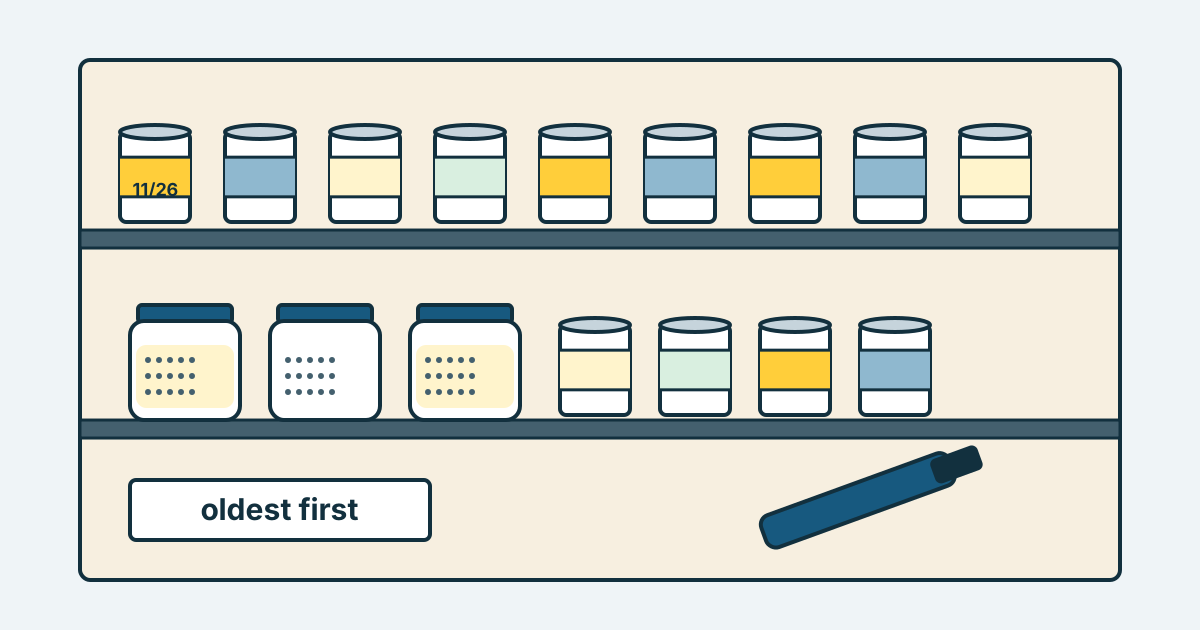
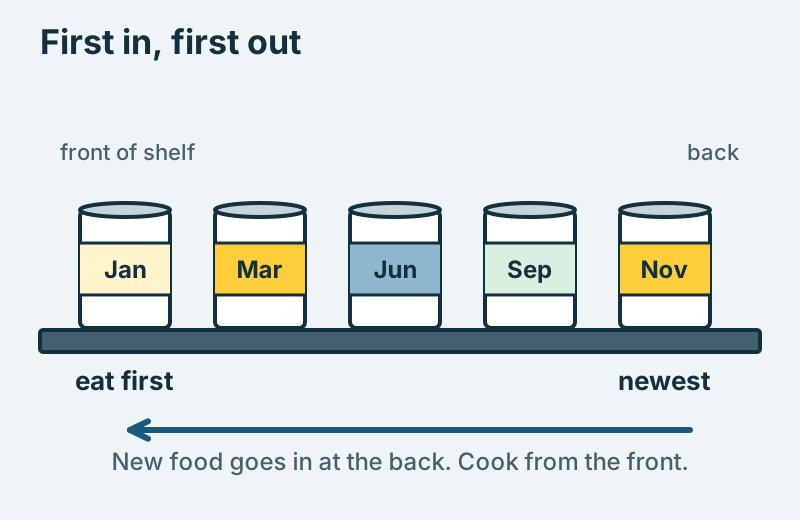
- Write the purchase month on every can and bag with a marker, big enough to read without picking it up.
- New food goes to the back, older food moves forward.
- Cook from the front of the shelf once a week. Bean chili, tuna pasta and rice bowls all use emergency staples.
- Do a full check once a year. A fixed date, such as when the clocks change, makes it easier to remember.
What to stock first
If you are starting from nothing, I would go in this order:
- Protein that needs no cooking: canned beans, chicken, tuna or salmon.
- Ready-to-eat carbohydrates: crackers, cereal, granola.
- A nut or seed butter, if no one is allergic.
- Canned fruit and vegetables.
- Rice, pasta or oats, for when you can cook.
The Canadian Red Cross suggests choosing long-lasting foods and avoiding items that need refrigeration once opened, since an outage could spoil them. Plan around allergies, celiac disease and intolerances, as Health Canada reminds us. Do not forget a manual can opener.
To work out how much, use what to stock by calories or let the plan builder do it for your household. For outage meal ideas, see 14 days of no-power pantry meals. Home-canned food is a separate subject with its own safety rules, covered in the canning section once it has been reviewed.
Questions people ask
Which pantry foods last more than a year?
USDA FSIS gives 2 to 5 years for low-acid canned goods such as meat, poultry, stews, beans, corn and peas, 2 to 5 years for shelf-stable canned ham, 2 years for rice and dried pasta, and 18 months for tuna and seafood in pouches, all kept cool and dry.
How long do canned tomatoes and fruit last?
USDA FSIS lists high-acid canned goods, including tomatoes, most fruit, juice and pickles, at 12 to 18 months.
Is food unsafe after the best-before date?
In Canada, the CFIA says a best-before date is not an indicator of food safety, before or after the date. It is about freshness and quality of unopened food. Infant formula and some special dietary foods carry expiration dates instead, and those must be followed.
What is the best temperature to store canned food?
USDA FSIS says below 85°F (29°C) is best, and that temperatures over 100°F (38°C) harm canned goods. Avoid storing food beside the stove, under the sink, or in a damp garage or basement.
When should I throw out a can?
USDA FSIS says to discard cans that are swollen, heavily rusted or deeply dented (a dent you can lay a finger into), and any can that hisses loudly or spurts when opened.
Where to buy
Some links earn me a commission at no cost to you. How this works
Canned beans, tuna, chicken or stew
Canned chunk chicken breast, multi-pack
Fully cooked and ready to eat from the can; USDA FSIS lists canned meat and poultry at 2 to 5 years.
Check prices and optionsat Amazon.comCheck prices and optionsat Amazon.ca
Rice, pasta or oats
Long-grain white rice, 20 lb (9 kg) bag
Plain white rice in a large bag; USDA FSIS lists rice and dried pasta at 2 years in a cool, dry place.
Check prices and optionsat Amazon.comCheck prices and optionsat Amazon.ca
Rice, pasta or oats
Old-fashioned rolled oats, large bag
Rolled oats can be soaked instead of cooked, as in the soaked oats recipe on this site.
Check prices and optionsat Amazon.comCheck prices and optionsat Amazon.ca
Rice, pasta or oats
Dried pasta, multi-pack
USDA FSIS lists dried pasta at 2 years in a cool, dry place.
Check prices and optionsat Amazon.comCheck prices and optionsat Amazon.ca
Manual can opener
OXO Good Grips Lock & Go Can Opener
A manual opener that works without power and has locking arms that hold the can while you turn.
Check prices and optionsat Amazon.comCheck prices and optionsat Amazon.ca
Where these numbers come from (4 sources)
- USDA FSIS: Shelf-Stable Food Safety https://www.fsis.usda.gov/food-safety/safe-food-handling-and-preparation/food-safety-basics/shelf-stable-food
- Canadian Food Inspection Agency: Date markings and storage instructions https://inspection.canada.ca/en/food-labels/labelling/industry/date-markings-and-storage-instructions
- Health Canada: Food and drinking water safety in an emergency https://www.canada.ca/en/health-canada/services/food-drinking-water-safe-emergency.html
- Canadian Red Cross: Disaster prep on a budget https://www.redcross.ca/blog/2020/1/disaster-prep-on-a-budget