Soaked Oats with Shelf-Stable Milk
Oats softened in shelf-stable milk with fruit on top. A no-power breakfast in about 15 minutes, or overnight if your fridge works.
- Serves 2 servings
- Time 15 min
- Heat None needed
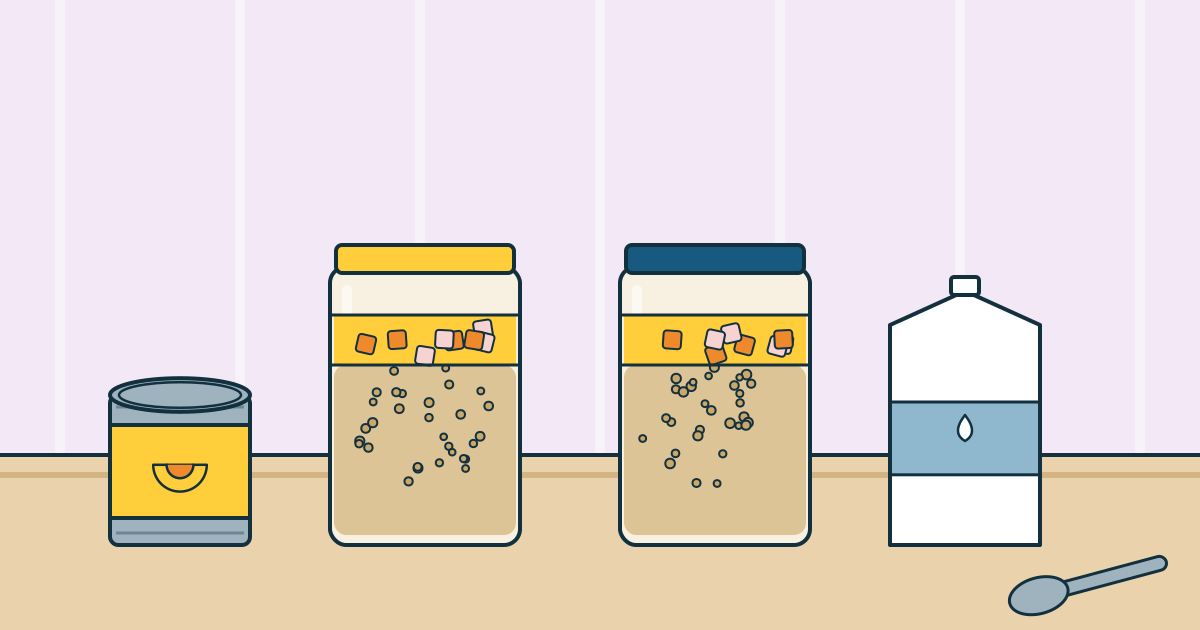
Overnight oats are usually made in the fridge. With no power, milk left out overnight is not safe, so this version soaks for minutes, not hours, and you eat it straight away.
Ingredients
Scaled from 2. Round cans to the nearest whole one, and add spices to taste.
- 1 cup (90 g) quick or rolled oats
- 1 cup (250 mL) shelf-stable milk, or two 8 fl oz single-serve cartons
- ½ cup (130 mL) canned fruit, drained
- 2 tbsp (30 mL) raisins or other dried fruit
- ¼ tsp (1 mL) ground cinnamon
- 2 tbsp (30 mL) peanut butter, optional
- sugar or syrup, to taste
Equipment
- Two bowls or jars
- Spoon
- Manual can opener, for canned fruit
Steps
- Divide the oats and cinnamon between the bowls or jars.
- Pour the milk over the oats and stir.
- Let them stand until soft: about 10 minutes for quick oats, about 20 for rolled oats.
- Top with the fruit, raisins and peanut butter, and sweeten to taste.
- Eat within 2 hours of opening the milk. Single-serve cartons mean nothing is left open.
- If your fridge is working and at or below 40°F (4°C), you can soak them in it overnight instead.
Swaps from the pantry
- Powdered milk mixed with safe drinking water, following the label.
- Shelf-stable soy, oat or almond milk in cartons.
- Granola or crisp cereal on top for crunch.
- Sunflower seed butter instead of peanut butter.
Allergens
- Dairy
- Peanuts
Dairy from the milk; peanuts only if you add peanut butter. Oats are often processed alongside wheat, so check the label if you avoid gluten.
Ingredients vary by brand, so read every label for your household's allergies.
Food safety
- Check every can before you open it. Do not use food from cans that are leaking, bulging or badly dented, or that have a deep dent on a seam.
- Once opened, eat it within 2 hours, or 1 hour when it is above 90°F (32°C). If your fridge is working and at or below 40°F (4°C), put leftovers in a covered container and refrigerate them. If not, throw leftovers out. See food safety when the fridge fails.
- Use safe drinking water for everything here, and especially for water that is not cooked: bottled, or boiled or treated as in treating water.
- When in doubt, throw it out. Do not taste food to test it.
Where to buy
Some links earn me a commission at no cost to you. How this works
Rice, pasta or oats
Long-grain white rice, 20 lb (9 kg) bag
Plain white rice in a large bag; USDA FSIS lists rice and dried pasta at 2 years in a cool, dry place.
Check prices and optionsat Amazon.comCheck prices and optionsat Amazon.caRice, pasta or oats
Old-fashioned rolled oats, large bag
Rolled oats can be soaked instead of cooked, as in the soaked oats recipe on this site.
Check prices and optionsat Amazon.comCheck prices and optionsat Amazon.caRice, pasta or oats
Dried pasta, multi-pack
USDA FSIS lists dried pasta at 2 years in a cool, dry place.
Check prices and optionsat Amazon.comCheck prices and optionsat Amazon.caPeanut butter or another nut or seed butter
Peanut butter, large jars, multi-pack
Ready-to-eat protein that needs no cooking or fridge before opening; check for peanut allergies in your household first.
Check prices and optionsat Amazon.comCheck prices and optionsat Amazon.ca
Sources
- USDA FSIS: Shelf-Stable Food Safety https://www.fsis.usda.gov/food-safety/safe-food-handling-and-preparation/food-safety-basics/shelf-stable-food
- Ready.gov: Food https://www.ready.gov/food
- FoodSafety.gov: Food Safety During a Power Outage (chart) https://www.foodsafety.gov/food-safety-charts/food-safety-during-power-outage
- CDC: How to Make Water Safe in an Emergency https://www.cdc.gov/water-emergency/about/index.html
Updated