Pantry Gazpacho
A chunky cold tomato soup from canned tomatoes, tomato juice and jarred peppers. No blender, no stove, good on a hot day.
- Serves 3 servings
- Time 10 min
- Heat None needed
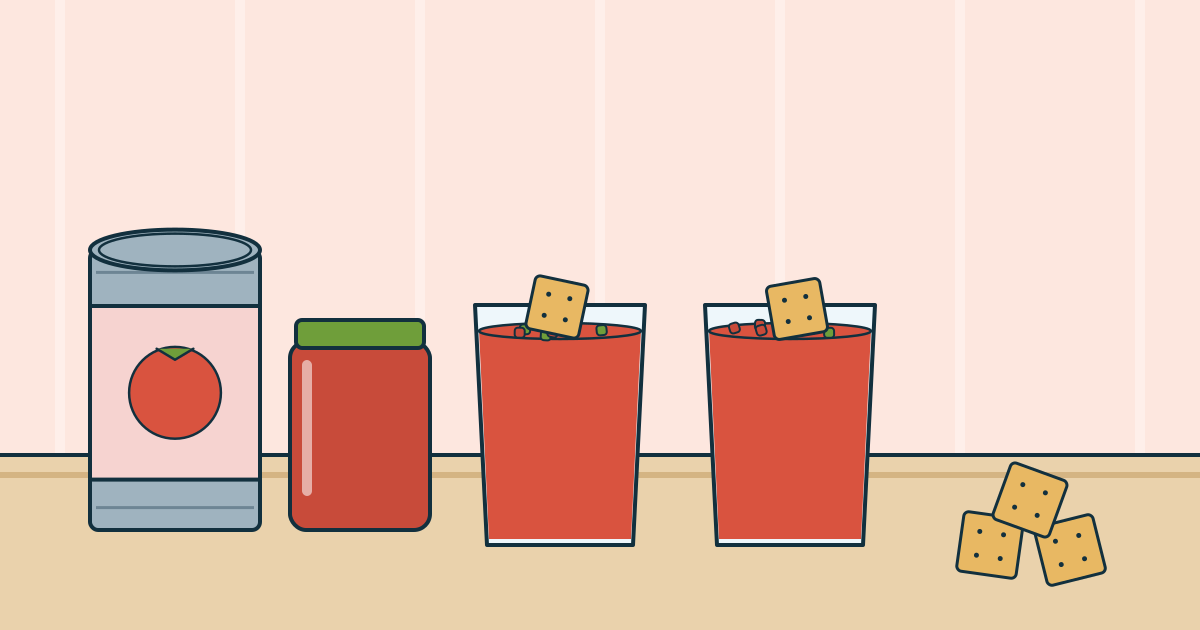
Gazpacho is meant to be eaten cold, which makes it one of the few soups that suits a summer outage. This version skips the blender and the fresh vegetables, so it is chunky rather than smooth.
Ingredients
Scaled from 3. Round cans to the nearest whole one, and add spices to taste.
- 1 can (28 oz / 796 mL) diced or crushed tomatoes
- 1½ cups (380 mL) tomato or vegetable juice
- ½ cup (130 mL) jarred roasted red peppers, chopped
- 2 tbsp (30 mL) olive oil
- 1 tbsp (15 mL) vinegar or bottled lemon juice
- ½ tsp (2 mL) garlic powder
- ½ tsp (2 mL) onion powder
- salt, pepper and hot sauce, to taste
- crackers or croutons, to serve
Equipment
- Manual can opener
- Large bowl
- Fork or potato masher
- Knife or kitchen scissors
Steps
- Check the cans and jar, wipe the lids and open them.
- Pour the tomatoes into the bowl and mash them with a fork or masher until fairly smooth.
- Chop the peppers small with a knife, or snip them in the jar with kitchen scissors, and add them.
- Stir in the juice, oil, vinegar, garlic and onion powder. Season with salt, pepper and hot sauce.
- Serve in cups or bowls with crackers on top. Without a working fridge, finish it within 2 hours.
Swaps from the pantry
- Canned diced tomatoes with green chiles for more heat.
- Add a drained can of corn or white beans to make it a meal.
- Dried basil or oregano instead of the onion powder.
- If the power is back, chill it before serving.
Allergens
- Wheat
Wheat only from the crackers or croutons. Leave them off or use rice crackers.
Ingredients vary by brand, so read every label for your household's allergies.
Food safety
- Check every can before you open it. Do not use food from cans that are leaking, bulging or badly dented, or that have a deep dent on a seam.
- Once opened, eat it within 2 hours, or 1 hour when it is above 90°F (32°C). If your fridge is working and at or below 40°F (4°C), put leftovers in a covered container and refrigerate them. If not, throw leftovers out. See food safety when the fridge fails.
- Use safe drinking water for everything here, and especially for water that is not cooked: bottled, or boiled or treated as in treating water.
- When in doubt, throw it out. Do not taste food to test it.
Where to buy
Some links earn me a commission at no cost to you. How this works
Manual can opener
OXO: OXO Good Grips Lock & Go Can Opener
A manual opener that works without power and has locking arms that hold the can while you turn.
Check prices and optionsat Amazon.comCheck prices and optionsat Amazon.ca
Sources
- USDA FSIS: Shelf-Stable Food Safety https://www.fsis.usda.gov/food-safety/safe-food-handling-and-preparation/food-safety-basics/shelf-stable-food
- Ready.gov: Food https://www.ready.gov/food
- FoodSafety.gov: Food Safety During a Power Outage (chart) https://www.foodsafety.gov/food-safety-charts/food-safety-during-power-outage
- CDC: How to Make Water Safe in an Emergency https://www.cdc.gov/water-emergency/about/index.html
Updated