Hot Cocoa from Pantry Powders
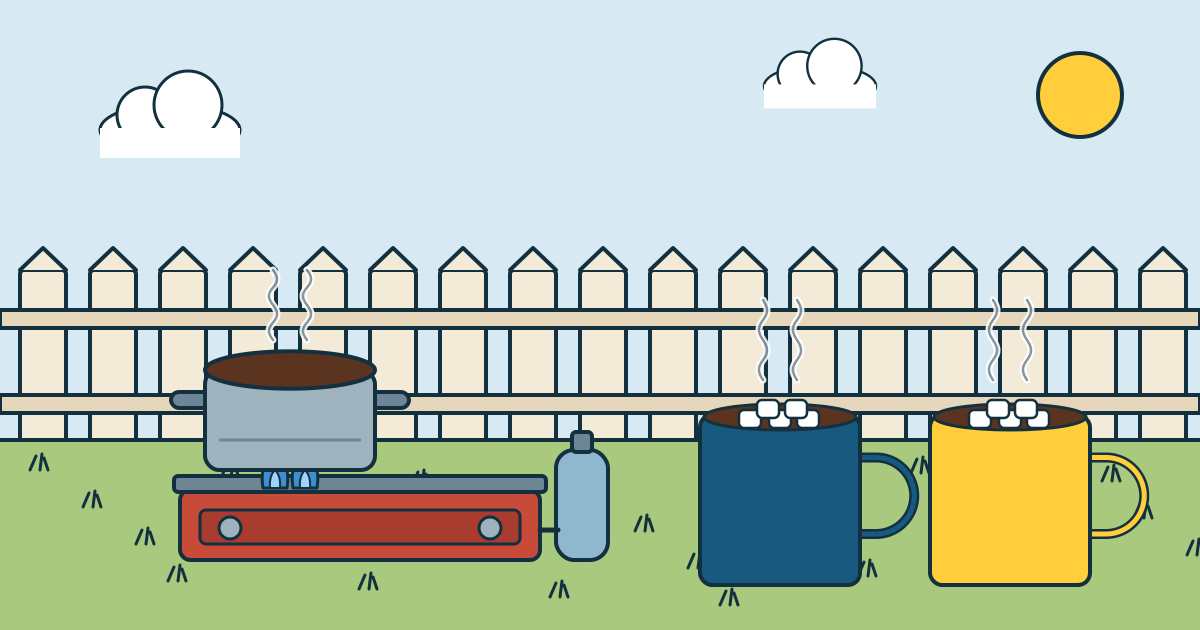
Powdered milk, cocoa and sugar whisked into hot water on an outdoor stove. A warm drink for a cold, dark evening.
- Serves 4 servings
- Time 7 min
- Heat Outdoor stove
Ready.gov lists comfort foods as part of an emergency supply. A hot drink is one of the simplest, and powdered milk keeps on the shelf until you mix it.
Ingredients
Scaled from 4. Round cans to the nearest whole one, and add spices to taste.
- ⅔ cup (160 mL) nonfat powdered milk
- 3 tbsp (45 mL) unsweetened cocoa powder
- 3 tbsp (45 mL) sugar
- salt, a pinch
- 4 cups (1 L) safe drinking water
- mini marshmallows or cinnamon, optional
Equipment
- Camp stove or barbecue side burner, outdoors only
- Small pot
- Whisk or fork
- Mugs
- Oven mitt
- Insulated bottle, optional
Fuel used
About 5 minutes on one burner. Heating more water at once and keeping it in an insulated bottle saves relighting later.
Steps
- Set the stove up outdoors on a flat, stable surface, at least 20 feet (6 m) from doors, windows and vents.
- Whisk the powdered milk, cocoa, sugar and salt together in the pot so there are no lumps.
- Whisk in a splash of water to make a paste, then whisk in the rest.
- Heat over medium, stirring, until it steams. Do not let it boil over.
- Turn the stove off. An adult carries the pot inside and pours.
- Let mugs cool to warm before giving them to children.
Swaps from the pantry
- Hot cocoa mix packets: follow the packet for how much water to use.
- Shelf-stable milk instead of powdered milk and water. Heat it gently.
- Heat the water alone, then stir the powders into each mug.
- Keep extra hot water in an insulated bottle for a second round without relighting the stove.
Allergens
- Dairy
Dairy from the powdered milk. Some cocoa mixes and marshmallows contain soy or other allergens; check labels.
Ingredients vary by brand, so read every label for your household's allergies.
Food safety
- Once opened, eat it within 2 hours, or 1 hour when it is above 90°F (32°C). If your fridge is working and at or below 40°F (4°C), put leftovers in a covered container and refrigerate them. If not, throw leftovers out. See food safety when the fridge fails.
- Use safe drinking water for everything here, and especially for water that is not cooked: bottled, or boiled or treated as in treating water.
- When in doubt, throw it out. Do not taste food to test it.
Where to buy
Some links earn me a commission at no cost to you. How this works
Camp stove, outdoor use only
Coleman: Coleman Classic 2-Burner Propane Camp Stove
A two-burner propane stove for cooking through an outage; use it outdoors only, never indoors or in a garage, because it produces carbon monoxide.
Check prices and optionsat Amazon.comCheck prices and optionsat Amazon.caBattery-operated carbon monoxide alarm
Kidde: Kidde KN-COB-B-LP Nighthawk Carbon Monoxide Alarm, Battery Operated
Kidde lists it as UL Listed with an electrochemical sensor, and it runs on 3 AA batteries so it keeps working in a power outage.
Check prices and optionsat Amazon.comCanadian link coming soonBattery-operated carbon monoxide alarm
Kidde: Kidde C3010 Worry-Free Carbon Monoxide Alarm, 10-Year Sealed Battery
Kidde lists its Canadian C3010-CA as CSA Listed with an electrochemical sensor and a sealed lithium battery, so it keeps working in an outage; check the listing shows the CSA mark before buying.
US link coming soonCheck prices and optionsat Amazon.ca
Sources
- Ready.gov: Food https://www.ready.gov/food
- CDC: How to Make Water Safe in an Emergency https://www.cdc.gov/water-emergency/about/index.html
Updated